
Smart bidding has transformed how businesses manage Google Ads campaigns by using machine learning to optimise bids based on conversion probability and customer value. However, automated bidding does not always outperform manual strategies, particularly when campaigns lack reliable conversion data or operate with limited budgets. Understanding the differences between these approaches helps businesses identify which bidding method can generate stronger return on ad spend (ROAS).
This article examines published Google Ads experiments, compares actual campaign performance, and presents an original financial analysis using standardised S$5,000 advertising budgets. The research explores how bidding strategies influence conversion volume, customer acquisition costs, revenue, and profitability. It also provides practical recommendations for Singapore businesses seeking to improve advertising efficiency through data-driven campaign management.
Quick Summary
- Bidding strategy comparison: Understand the differences between automated auction-time bidding and manual cost-per-click management.
- Published campaign research: Examine case studies showing a 13% ROAS improvement, a 230% increase in another test, and conflicting results from an independent experiment.
- Original ROAS analysis: Compare three hypothetical bidding outcomes using the same S$5,000 advertising budget.
- Conversion value insights: Discover why campaigns with fewer conversions can generate higher revenue and stronger advertising returns.
- Profitability calculations: Understand how gross profit margins influence the minimum ROAS a business needs to avoid advertising losses.
- Campaign optimisation: Learn how Singapore businesses can test bidding strategies, interpret results, and allocate marketing budgets more effectively.
Understanding Automated and Manual Google Ads Bidding
Google Ads offers different bidding strategies depending on whether advertisers prioritise traffic, conversions, or revenue. Manual CPC allows marketers to establish maximum cost-per-click bids and adjust them based on campaign performance. This approach offers greater direct control over keyword-level bidding decisions but requires regular monitoring and optimisation.
Google's automated conversion-based strategies use machine learning to adjust bids according to signals available during individual advertising auctions. These signals include device type, location, time of day, browser, and audience characteristics. Rather than applying one static bid across every opportunity, the algorithm estimates conversion likelihood or potential conversion value.
According to Google Ads' official bidding documentation, four major AI-driven strategies support different objectives: Maximise Conversions, Target CPA, Maximise Conversion Value, and Target ROAS. The first two focus on conversion volume or acquisition costs, while the latter two optimise towards conversion value. Google updated the naming structure of several Search bidding strategies beginning in June 2026, without changing their underlying behaviour.
For businesses primarily concerned with revenue, Target ROAS offers a particularly relevant comparison against manual CPC. However, the algorithm can only optimise effectively towards the conversion values advertisers report. Inaccurate tracking, inconsistent transaction values, or poorly defined conversion actions can reduce the usefulness of automated recommendations.
Smart Bidding vs Manual Bidding: What Published Research Reveals
Published campaign experiments provide a more meaningful comparison than assuming that newer advertising technology always generates superior results. However, studies differ in campaign objectives, budgets, testing methods, and attribution systems. Reviewing both positive and negative outcomes helps marketers understand when automation creates value and when human intervention remains important.
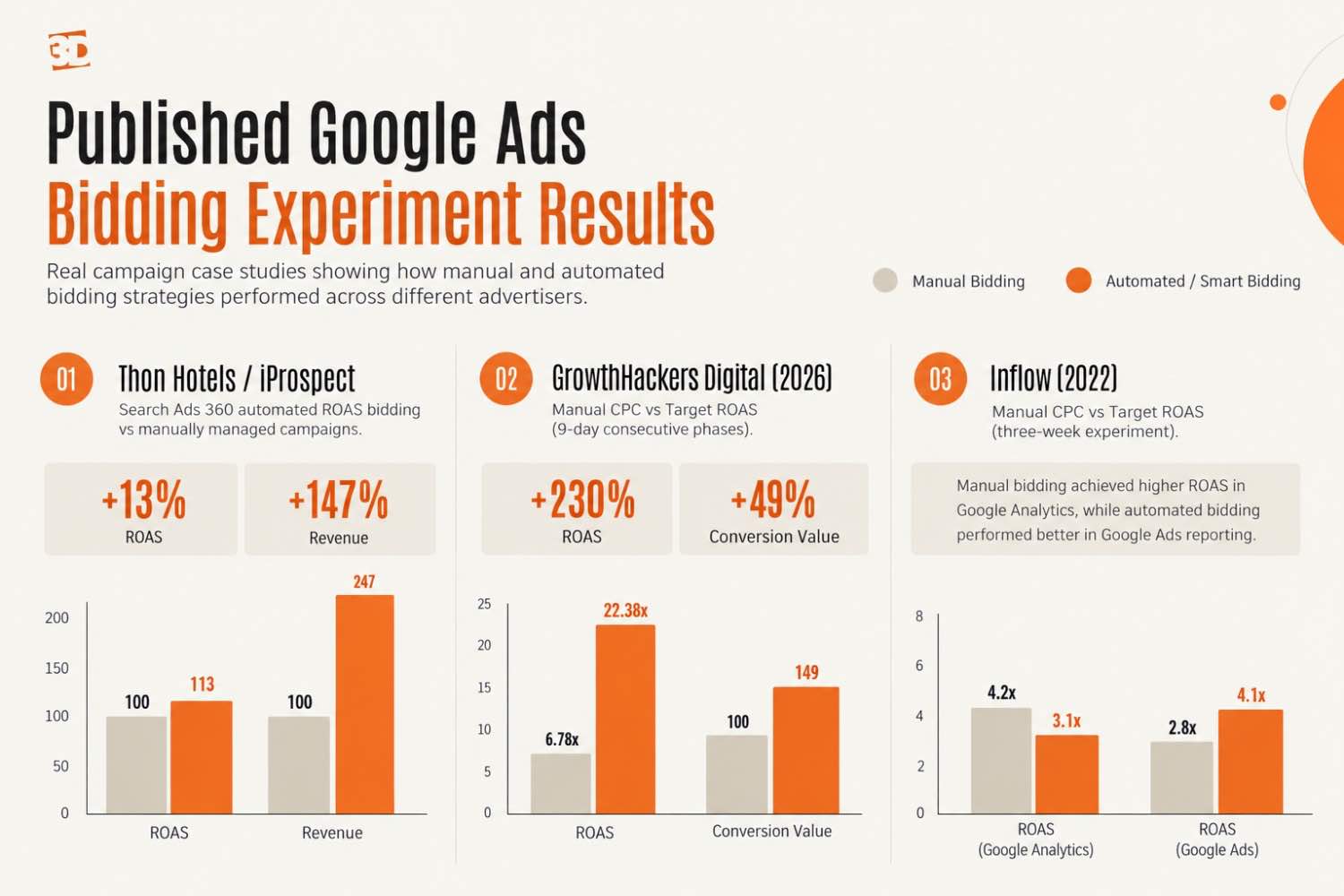
Table 1: Published Google Ads Bidding Experiment Results
| Research / Advertiser | Comparison | Reported Result | Research Limitation |
| Thon Hotels / iProspect | Search Ads 360 automated ROAS bidding vs manually managed campaigns | +13% ROAS, +147% revenue | One-month comparison using Search Ads 360 |
| GrowthHackers Digital, 2026 | Manual CPC vs Target ROAS | ROAS increased from 6.78x to 22.38x, approximately +230% | Consecutive nine-day phases, not simultaneous randomised testing |
| Inflow, 2022 publication | Manual CPC vs Target ROAS | Manual bidding achieved higher ROAS in Google Analytics; automation led in Google Ads reporting | Three-week experiment with attribution differences |
Sources: Google Marketing Platform, Thon Hotels Case Study, GrowthHackers Digital, Manual CPC vs Target ROAS Experiment, and Inflow, Automated vs Manual Bidding Case Study.
Finding 1: Automation Can Increase Revenue Efficiency
Thon Hotels worked with iProspect Norway to evaluate automated ROAS bidding against manually managed search campaigns. Over one month, the automated approach generated a reported 13% improvement in ROAS alongside 147% revenue growth. The campaign also reduced the time specialists spent adjusting individual bids.
However, the result does not establish that every Google Ads account will achieve similar improvements. The experiment involved Search Ads 360, which has its own campaign management environment, and the published summary does not provide every variable needed to isolate the effect of bidding alone. Nevertheless, the outcome demonstrates the potential value of automation when advertisers manage numerous competitive keywords.
Finding 2: Higher CPC Can Produce Significantly Better ROAS
A March 2026 GrowthHackers Digital case study compared manual CPC with Target ROAS across two consecutive nine-day phases. The reported ROAS increased from 6.78x during manual management to 22.38x during automated bidding. Despite higher average click costs, the automated phase generated approximately 49% more conversion value while spending substantially less.
The case illustrates why marketers should not treat lower CPC as the primary measure of advertising success. However, the experiment recorded fewer than seven conversions in each phase and did not use simultaneous randomised groups. Its short duration and small conversion sample limit how confidently advertisers can attribute the improvement to bidding strategy alone.
Finding 3: Manual Bidding Can Still Outperform Automation
Inflow conducted a separate experiment that divided campaign traffic between manual CPC and Target ROAS. Its results showed that manual bidding generated higher revenue and ROAS in Google Analytics, while automated bidding performed better according to Google Ads reporting. These contradictory outcomes raised important questions about attribution and campaign measurement.
The agency also made manual bid adjustments during the experiment, and the reported results varied across devices. These conditions complicate direct comparisons but highlight a crucial lesson for advertisers. The apparent winner can change depending on how a business measures conversions, revenue, and customer behaviour.
Original Research: Comparing ROAS With the Same S$5,000 Advertising Budget
To examine the financial implications of different bidding outcomes, we developed an original scenario analysis using a standardised S$5,000 advertising budget. Rather than assuming that automation automatically increases ROAS, the model compares three possible outcomes with different conversion volumes and average order values. All scenarios use identical advertising expenditure to isolate the relationship between transactions, revenue, and efficiency.
The first scenario represents a manually managed campaign generating consistent sales. The second illustrates an automated strategy that prioritises higher-value customers, while the third represents a strategy that attracts more transactions at lower average values. These figures are hypothetical calculations, not observed client campaign results or industry benchmark averages.
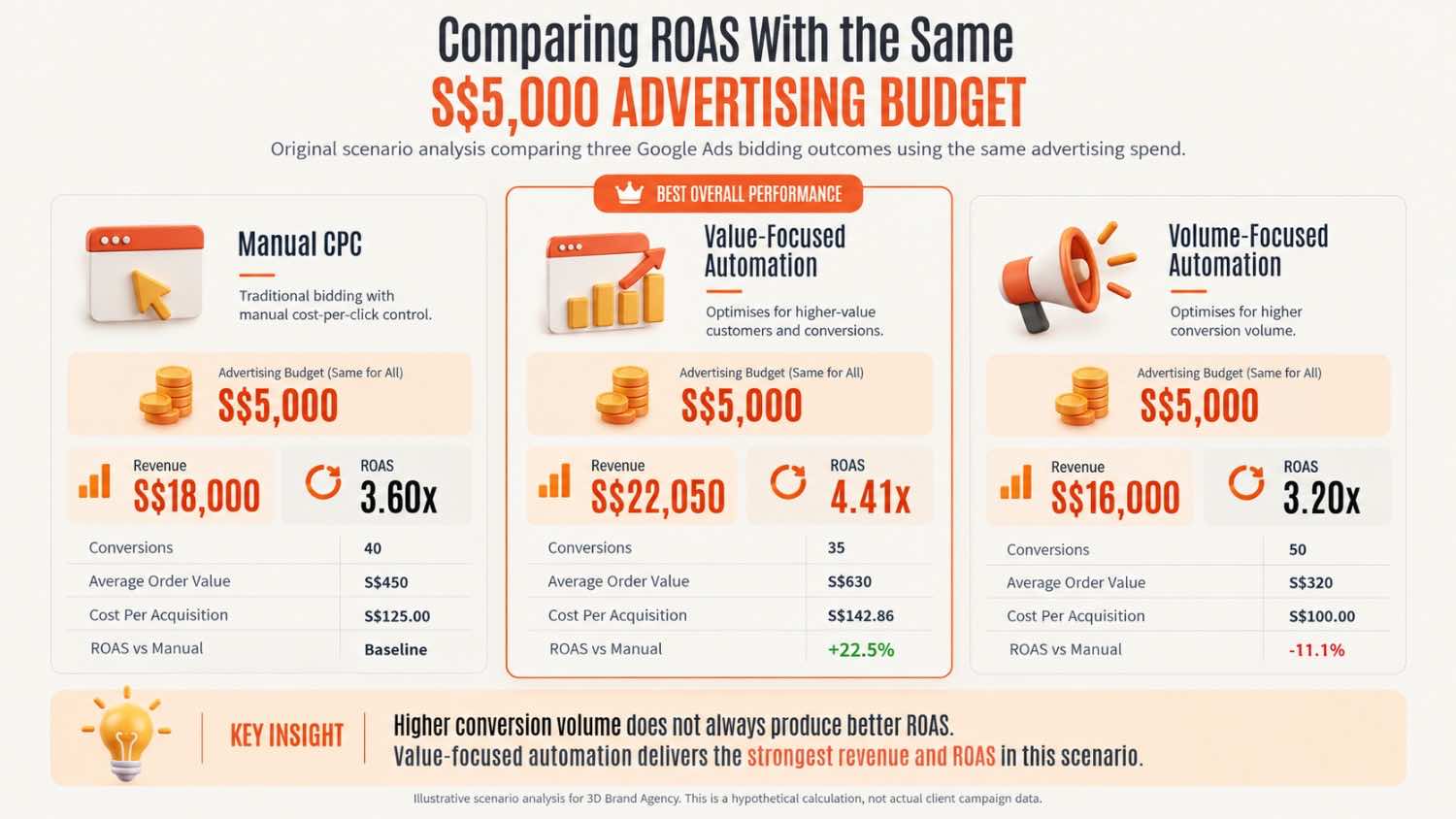
Table 2: Original S$5,000 ROAS Comparison
| Performance Metric | Manual CPC | Value-Focused Automation | Volume-Focused Automation |
| Advertising Budget | S$5,000 | S$5,000 | S$5,000 |
| Conversions | 40 | 35 | 50 |
| Average Order Value | S$450 | S$630 | S$320 |
| Revenue | S$18,000 | S$22,050 | S$16,000 |
| Cost Per Acquisition | S$125.00 | S$142.86 | S$100.00 |
| ROAS | 3.60x | 4.41x | 3.20x |
| ROAS vs Manual | Baseline | +22.5% | -11.1% |
Research methodology: Original editorial scenario analysis for 3D Brand Agency. Revenue equals conversions multiplied by average order value. CPA equals advertising expenditure divided by conversions, while ROAS equals advertising-attributed revenue divided by advertising expenditure.
Finding 4: More Conversions Do Not Always Mean Better ROAS
The volume-focused scenario generates 50 conversions, representing 25% more transactions than manual CPC. However, its lower average order value reduces total revenue to S$16,000 and ROAS to 3.20x. This demonstrates how a campaign can attract more customers while generating weaker advertising returns.
In contrast, the value-focused scenario generates only 35 conversions but produces S$22,050 in revenue. Its higher average order value increases ROAS to 4.41x, representing a 22.5% improvement over the manual baseline. The scenario also carries the highest CPA, illustrating why acquisition costs alone cannot determine campaign profitability.
Finding 5: Average Order Value Can Matter More Than Conversion Volume
The manual campaign establishes a baseline revenue figure of S$18,000 from 40 transactions. At an average order value of S$630, an alternative strategy would need just 29 transactions to exceed that revenue. This means a business could generate fewer sales while achieving stronger ROAS if it successfully attracts higher-value customers.
This relationship explains the commercial appeal of value-based bidding strategies. Instead of treating every conversion equally, advertisers can assign values that reflect the different revenue contributions of their products or services. Google explains this distinction in its value-based bidding guidance.
The Missing Metric: Which Strategy Delivers Better Profitability?
ROAS compares revenue against advertising expenditure, but it does not account for the cost of delivering products or services. Businesses with low gross margins can generate strong ROAS and still struggle to achieve profitability. Therefore, bidding decisions should also reflect product margins, operating expenses, and customer lifetime value.
Consider the previous S$5,000 scenarios using an illustrative gross profit margin of 35%. The manual campaign generates S$6,300 in gross profit, leaving S$1,300 after advertising expenditure. The value-focused scenario produces S$7,717.50 in gross profit, leaving S$2,717.50 after advertising expenditure, while the volume-focused scenario leaves just S$600.
These calculations exclude salaries, overheads, fulfilment expenses outside cost of goods sold, and other marketing costs. However, they reveal how advertising revenue quality influences financial outcomes. The value-focused scenario delivers more than twice the post-advertising contribution of the manual scenario despite generating fewer conversions.
At a 35% gross margin, a business requires approximately 2.86x ROAS to cover advertising costs before other operating expenses. The calculation divides one by the gross margin expressed as a decimal. Businesses with thinner margins require higher ROAS thresholds, making profitability-based bidding targets particularly important.
When Manual Bidding Still Makes Business Sense
Manual CPC remains useful when advertisers require direct bidding control or want to investigate performance across individual keywords. It can support early-stage testing, particularly when businesses have limited conversion history or need to evaluate which search terms generate qualified traffic. However, manual management becomes increasingly demanding as campaigns expand across numerous keywords and audience segments.
Automation generally offers stronger scalability when businesses maintain reliable conversion tracking and meaningful conversion values. The system can evaluate contextual signals across individual auctions more efficiently than a person managing bids manually. Nevertheless, advertisers still need to monitor targets, campaign structure, budgets, and customer outcomes to avoid optimising towards misleading data.
The ideal choice depends on campaign maturity and business objectives rather than a universal preference for either approach. An established e-commerce business with consistent transaction tracking may benefit from value-focused automation. A newer service provider with limited leads may need to strengthen measurement and qualification processes before relying heavily on revenue-based optimisation.
How to Test Both Bidding Strategies Properly
Businesses should use controlled experiments rather than switching strategies based on short-term performance fluctuations. A reliable test helps separate genuine performance improvements from seasonality, changes in audience demand, and attribution differences. Google also recommends avoiding simultaneous creative or landing page changes when evaluating bidding experiments.
- Establish the campaign baseline. Review recent advertising expenditure, conversions, transaction values, CPA, and ROAS. Confirm that conversion tracking captures meaningful business outcomes rather than irrelevant actions. Identify a campaign with sufficient conversion history to support a useful comparison.
- Create a controlled bidding experiment. Use Google Ads' experiment tools to compare the existing approach against an alternative strategy. Keep targeting, creatives, landing pages, and conversion definitions consistent wherever possible. Document any unavoidable differences that could influence the results.
- Allow sufficient testing time. Google's bid strategy testing guidance recommends allowing approximately two weeks or three conversion cycles for the initial ramp-up, followed by at least 30 days of uninterrupted measurement. The guidance also recommends campaigns and test splits with sufficient conversion volume, aiming for at least 30 conversions in the previous 30 days. Longer sales cycles may require additional time before results become reliable.
- Compare financial outcomes, not clicks alone. Evaluate conversion value, actual ROAS, acquisition costs, and gross profit contribution for both strategies. Account for conversion delays and differences between Google Ads and website analytics reporting. Select the approach that delivers stronger, repeatable commercial outcomes rather than simply generating more traffic.
What This Means for Singapore Businesses
Singapore businesses face different advertising conditions depending on their industries, target audiences, and competitive environments. E-commerce retailers with measurable transaction values can evaluate revenue-focused bidding directly, while professional service providers may need to assign values to qualified enquiries. Accurate conversion measurement becomes essential when sales occur after consultations, quotations, or offline follow-ups.
A successful campaign requires more than selecting an automated or manual bidding option. Businesses must combine keyword research, landing page optimisation, conversion tracking, and ongoing performance analysis. These capabilities form part of the search engine marketing and digital marketing services offered by 3D Brand Agency, which focus on reaching relevant audiences and improving measurable marketing results.
Cross-channel analysis also helps businesses understand how Google Ads contributes to their broader customer acquisition strategy. Through 3D Brand Agency's data-driven marketing and campaign analytics solutions, businesses can explore ways to connect advertising performance with customer engagement, conversions, and ROI. This integrated approach encourages more informed decisions across search and social advertising investments.

Conclusion: How Smart Bidding Influences ROAS and Advertising Profitability
Want to maximise your Google Ads performance and improve your advertising ROAS? 3D Brand Agency helps Singapore businesses develop data-driven marketing strategies that prioritise quality leads, conversions, and measurable business growth. Explore our digital marketing services orcontact 3D Brand Agency to discover how a performance-focused campaign strategy can help you achieve better returns from your advertising budget.